Cyber-physical security is the practice of protecting the systems where the digital and physical worlds meet, such as internet-connected cameras, access control, and building sensors, as one combined risk rather than two separate ones. Physical security and cybersecurity are converging because the devices that guard your building now live on your network, which means a hacked camera or door reader can become a doorway into your data, and a cyberattack can unlock your doors. Managing both under one strategy is no longer optional for a modern business.
Table of Contents
ToggleWhat is cyber-physical security convergence?
For years, physical security and IT were separate departments with separate vendors. One team handled locks, badges, and cameras. Another handled servers, networks, and data. That separation made sense when building security devices were standalone systems with their own wiring and no connection to the internet.
CISA also recommends converging cybersecurity and physical security functions to create a more holistic approach to organizational risk.
That world is gone. Today your cameras, access control readers, alarm panels, and even thermostats are network-connected devices. Convergence, sometimes called security convergence or converged security, is the recognition that these systems now share the same infrastructure and the same risks, and therefore need to be secured and managed together rather than in silos.
Why physical security and cybersecurity are converging
Several shifts have pushed these two worlds together, and they are not reversing.
Building devices are now on the network. Cloud cameras, cloud-based access control, and smart building sensors connect to your network and the internet, placing many of these systems within the broader operational technology security landscape addressed by NIST’s guidance on OT security.
A physical device can be a cyber entry point. An unsecured camera or badge reader with default passwords can give an attacker a foothold on your network, then a path to your data.
A cyberattack can have physical consequences. If access control or cameras are compromised, an attacker could unlock doors, disable recording, or lock staff out, turning a digital breach into a physical one.
Attackers exploit the gap. When the IT team assumes the security integrator secured the cameras, and the integrator assumes IT did, no one owns the risk, and that gap is exactly what attackers look for.
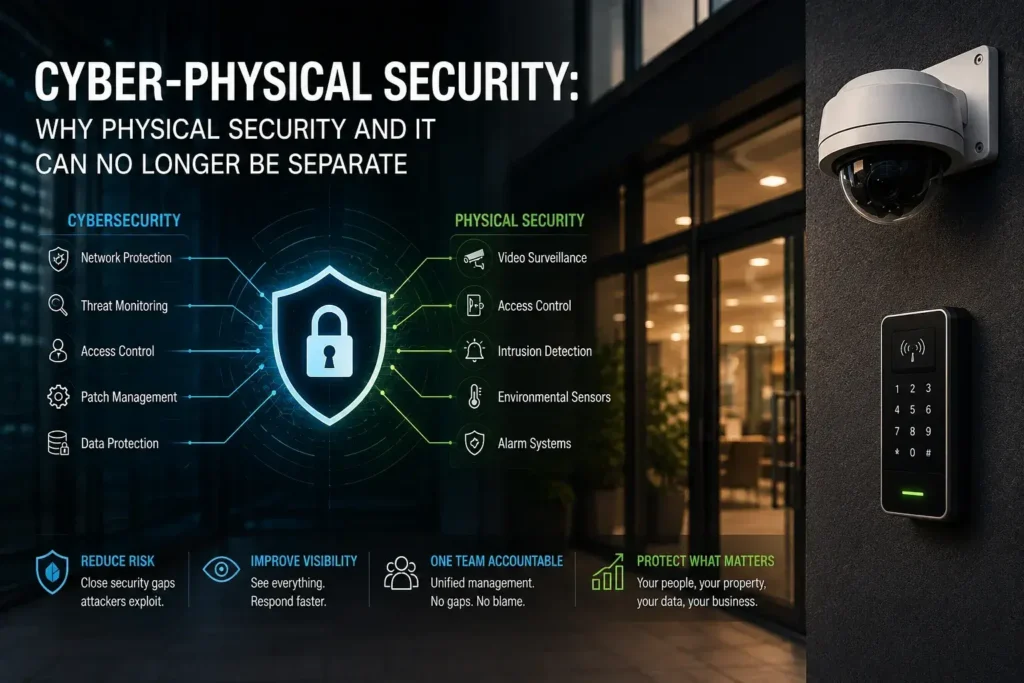
The risk of managing them separately
When physical security and cybersecurity are handled by different vendors who do not talk to each other, dangerous gaps appear. Cameras and access control get installed on the main network with no segmentation. Default passwords never get changed. Firmware never gets updated. No one monitors these devices the way they monitor laptops and servers. Each of these gaps is a known way attackers get in, and each exists because responsibility was split. Converging the two closes the gap by giving one team accountability for every connected device, whether it guards your data or your front door.
What converged security looks like in practice
A converged approach treats every security device, digital or physical, as part of one protected environment. In practice that means access control and cameras are segmented from your main network, secured with strong authentication, and kept updated. It means the same monitoring that watches your IT systems also watches your building devices. It means one provider is accountable for how your cameras, door readers, network, and data all fit together, so nothing falls through the cracks. This is the idea behind BSGtech Unified Protection, which brings managed IT, cybersecurity, and physical security under a single, coordinated strategy.
How to move toward converged security
You do not have to rebuild everything at once. A practical path starts with visibility and accountability.
Inventory your connected devices. Identify every camera, reader, sensor, and panel that touches your network, because you cannot protect what you have not counted.
Segment and secure them. Separate building devices from your main network, change default credentials, and enable strong administrator authentication.
Put one team in charge. Give a single provider accountability for both your IT and your physical security so the gap between them disappears.
Monitor everything. Extend the monitoring and patching you apply to computers to your building devices as well.
Where cyber-physical risk is highest
Every business with networked security devices faces this risk, but it is most acute in a few settings.
Facilities with lots of connected devices. The more cameras, readers, sensors, and smart building systems you run, the larger your attack surface and the more that can be overlooked.
Multi-vendor environments. When one company installed the cameras, another set up access control, and a third handles IT, no single party owns the security of it all, and that is where gaps live.
Regulated industries. Manufacturing, financial, healthcare, and similar businesses face both cyber and physical compliance expectations, so a converged approach helps satisfy both.
Multi-site operations. More locations mean more devices installed by more hands, which makes consistent security and monitoring across every site far harder without one accountable provider.
How BSGtech delivers converged security in Chicago
BSGtech provides converged cyber-physical security for businesses across Chicago and the surrounding suburbs through our Unified Protection approach. Instead of leaving your cameras and access control to one vendor and your IT to another, we bring managed IT, cybersecurity, and physical security under one accountable team. That means your building devices are secured like the network assets they are, monitored alongside your computers, and coordinated so attackers cannot slip through the gap between systems. Every engagement starts with a free security assessment.
Frequently Asked Questions
What is cyber-physical security?
Cyber-physical security is the protection of systems where the digital and physical worlds meet, such as internet-connected cameras, access control, and building sensors, treated as one combined risk. Because these devices sit on your network, a physical device can become a cyber entry point and a cyberattack can have physical consequences, so both must be secured together.
Why are physical security and cybersecurity converging?
Physical security and cybersecurity are converging because building security devices like cameras and access control now connect to your network and the internet. That shared infrastructure means the same risks apply to both, and a gap between the teams that manage them creates exactly the opening attackers exploit, so the two must be secured together.
What is converged security?
Converged security, also called security convergence, is the practice of managing physical security and cybersecurity as one coordinated strategy rather than in separate silos. It gives a single team accountability for every connected device, from door readers to servers, so building systems are secured, monitored, and updated the same way network systems are.
Can a hacker get in through a security camera?
An unsecured, internet-connected security camera can be exploited by attackers, especially if it still uses default passwords or outdated firmware. Once compromised, a camera can give an attacker a foothold on your network and a path toward your data. Securing cameras with segmentation, strong passwords, and updates is essential to prevent this.
How do I combine physical security and IT security?
You combine physical security and IT security by inventorying every network-connected building device, segmenting and securing them, and giving one provider accountability for both your IT and your physical security. A converged provider monitors and updates cameras and access control alongside your computers, closing the gaps that appear when separate vendors manage each side.

Michael Kahn is the founder and president of BSGtech, which has provided managed IT, cybersecurity, and backup services to Chicagoland businesses since 2009. He writes about technology in plain terms for owners who don't have IT staff in house. Read more about the author.
